


What exactly is high-salinity wastewater?
Published Time:
2021-12-03
Source:
Author:
What exactly is high-salinity wastewater?
Why is high-salinity wastewater so difficult to treat? We need to first understand what high-salinity wastewater is and its impact on biological systems! This article only discusses the biological treatment of high-salinity wastewater!
I. What is high-salinity wastewater?
High-salinity wastewater refers to wastewater with a total salt mass fraction of at least 1%. It mainly comes from chemical plants and the collection and processing of oil and natural gas. This wastewater contains various substances (including salts, oil, organic heavy metals, and radioactive substances). The sources of saline wastewater are widespread, and the volume is increasing year by year. Removing organic pollutants from saline wastewater is crucial for environmental protection. When using biological methods for treatment, high concentrations of salts inhibit microorganisms. When using physicochemical methods, the investment is large, the operating costs are high, and it is difficult to achieve the expected purification effect. Using biological methods to treat this type of wastewater remains a research focus both domestically and internationally.
The types and chemical properties of organic matter in high-salinity organic wastewater vary greatly depending on the production process, but the salt substances contained are mostly Cl-, SO42-, Na+, Ca2+, etc. Although these ions are essential nutrients for microbial growth, playing an important role in promoting enzymatic reactions, maintaining membrane balance, and regulating osmotic pressure during microbial growth. However, if the concentration of these ions is too high, it will have an inhibitory and toxic effect on microorganisms, mainly manifested as: high salt concentration, high osmotic pressure, microbial cell dehydration causing cell protoplast separation; salting-out effect reduces dehydrogenase activity; high chloride ion concentration is toxic to bacteria; high salt concentration increases the density of wastewater, and activated sludge is easily floated and lost, thus seriously affecting the purification effect of the biological treatment system.
II. Impact of Salinity on Biochemical Systems
1. Causes microbial dehydration and death
Under high salt concentration, changes in osmotic pressure are the main cause. The inside of a bacterium is a semi-closed environment, and it must exchange beneficial substances and energy with the external environment to maintain its life activity. However, it must also prevent most external substances from entering to avoid interference and obstruction of its internal biochemical reactions.
Increased salt concentration causes the concentration of the solution inside the bacteria to be lower than the outside. Because water moves from low concentration to high concentration, a large amount of water is lost from the bacteria, causing changes in its internal biochemical reaction environment, disrupting its biochemical reaction process until it stops, and the cells die.
2. Interferes with and blocks the microbial substance absorption process, leading to death
The cell membrane has selective permeability to filter substances harmful to bacterial life activities and absorb substances beneficial to its life activities. This absorption process is directly affected by the concentration and purity of the solution in the external environment. The addition of salt interferes with or blocks the bacteria's absorption environment, inhibiting or even killing bacterial life activity. This situation varies greatly depending on the individual bacteria, species, type of salt, and salt concentration.
3. Causes microbial poisoning and death
Some salts enter the bacteria during their life activities and disrupt their internal biochemical reaction processes. Some react with the bacterial cell membrane, causing its properties to change and no longer providing protection or absorbing certain substances beneficial to bacteria, thus inhibiting bacterial life activity or causing cell death. Heavy metal salts are representative of this, and some sterilization methods utilize this principle.
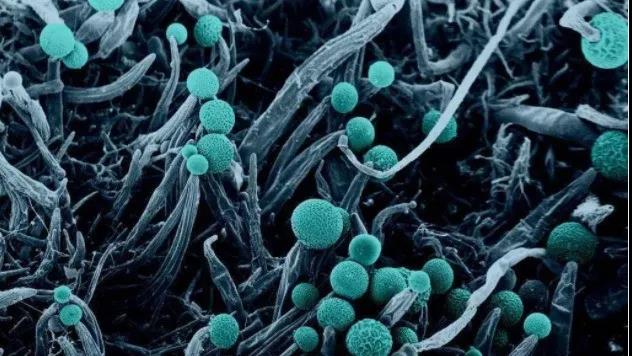
Studies have shown that the impact of high salinity on biochemical treatment is mainly reflected in the following aspects:
(1) As salinity increases, the growth of activated sludge is affected. Changes in its growth curve are manifested as: a longer adaptation phase; a slower growth rate in the logarithmic growth phase; and a longer duration of the deceleration growth phase.
(2) Salinity enhances microbial respiration and cell lysis.
(3) Salinity reduces the biodegradability and degree of degradation of organic matter, reducing the removal rate and degradation rate of organic matter.
III. How much salinity can a biochemical system tolerate?
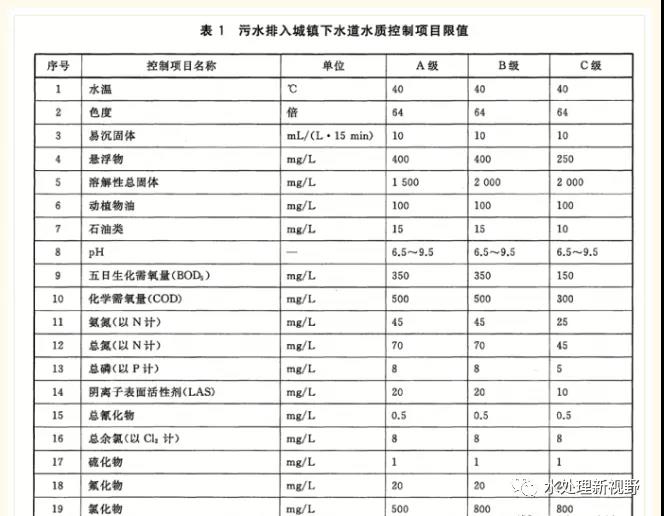
According to the "Standard for Wastewater Discharge into Urban Sewers" (CJ-343-2010), when entering a wastewater treatment plant for secondary treatment, the wastewater quality discharged into urban sewers should meet the requirements of Grade B (Table 1), including 600 mg/L of chloride and 6000 mg/L of sulfate.
According to Appendix III of the "Outdoor Drainage Design Code" (GBJ 14-87) (GB50014-2006 and the 2011 edition do not have specific instructions on salinity), "Permissible Concentration of Harmful Substances in the Influent of Biological Treatment Structures", the permissible concentration of sodium chloride is 4000 mg/L.

Engineering experience data shows that when the chloride ion concentration in wastewater is greater than 2000 mg/L, the activity of microorganisms will be inhibited, and the COD removal rate will decrease significantly; when the chloride ion concentration in wastewater is greater than 8000 mg/L, it will cause sludge volume expansion, a large amount of foam will appear on the water surface, and microorganisms will die successively.
Normally, we believe that a chloride ion concentration greater than 2000 mg/L and a salinity less than 2% (equivalent to 20000 mg/L) does not affect the treatment effect of the biochemical system and can be treated using the activated sludge method. However, if the acclimation is reasonable, salinity of 3%-4% using the activated sludge method to achieve stable compliance has also been encountered (there are successful cases of 5% in the community). However, it is important to remember that the influent salinity must be stable and not fluctuate too much, otherwise the biochemical system cannot withstand the collapse!
IV. Biochemical System High-salinity wastewater treatment Measures
1. Acclimation of activated sludge
Under conditions where the salinity is less than 2 g/L, saline wastewater can be treated through acclimation. By gradually increasing the salinity of the biochemical influent, microorganisms will balance the osmotic pressure inside the cells or protect the protoplasm inside the cells through their own osmotic pressure regulation mechanisms. These regulation mechanisms include aggregating low-molecular-weight substances to form a new extracellular protective layer, regulating their own metabolic pathways, and changing their genetic composition.
Therefore, normal activated sludge can treat high-salt wastewater with a certain salt concentration through a certain period of acclimatization. Although acclimatization can improve the salt tolerance and treatment efficiency of the activated sludge system, the salt tolerance of microorganisms in the acclimatized activated sludge is limited, and they are sensitive to environmental changes. When the chloride ion environment changes suddenly, the adaptability of microorganisms will immediately disappear. Acclimatization is only a temporary physiological adjustment of microorganisms to the environment and does not have genetic characteristics. This sensitive adaptability is very unfavorable to wastewater treatment.
The acclimatization time of activated sludge is generally 7-10 days. Acclimatization can improve the tolerance of sludge microorganisms to salt concentration. In the initial stage of acclimatization, the activated sludge concentration decreases due to the toxicity of the salt solution to microorganisms, resulting in the death of some microorganisms and negative growth. In the later stage of acclimatization, microorganisms that have adapted to the changed environment begin to reproduce, thus increasing the activated sludge concentration. Taking the COD removal of activated sludge in 1.5% and 2.5% sodium chloride solutions as an example, the COD removal rates in the initial and later stages of acclimatization are 60%, 80% and 40%, 60%, respectively.
2. Dilute influent
In order to reduce the salt concentration entering the biological system, the influent can be diluted to make the salt concentration lower than the toxic threshold, so that the biological treatment will not be inhibited. Its advantages are simple method, easy operation and management; disadvantages are increased treatment scale, infrastructure investment and operating costs.
3. Select salt-tolerant bacteria
Salt-tolerant bacteria are a general term for bacteria that can tolerate high concentrations of salt. In industry, they are mostly screened and enriched obligate strains. Currently, high salt concentration can tolerate about 5% and can operate stably, which is also a kind of biochemical treatment method for high-salt wastewater!
4. Select a reasonable process flow
Different treatment processes are selected according to different chloride ion concentrations, and anaerobic processes are appropriately selected to reduce the chloride ion concentration tolerance range of the subsequent aerobic section.
When the salinity is greater than 5g/L, evaporation and concentration desalination is an economical and effective feasible method. Other methods, such as culturing salt-containing bacteria, have problems in industrial practice.
Recommended Dynamics


Address: 3rd Floor, Building C15, Phase II, Dongyi International Media Industrial Park, Chaoyang District, Beijing
Email:info@horwater.com

Email:
Tel:
Tel:
图片alt标题设置: Horwater Environment (Beijing) Co., Ltd.
表单验证提示文本: Content cannot be empty!
循环体没有内容时: Sorry,no matching items were found.
CSS / JS 文件放置地