


How to deal with reverse osmosis membrane blockage
Published Time:
2021-12-03
Source:
Author:
If hollow fiber membranes are the three thousand worries, then reverse osmosis membranes are the thousands of knots in the heart. The common voice of membrane magicians: "Mirror, mirror, tell me, why is the reverse osmosis membrane blocked again? "
Reverse osmosis membrane: "You guess!"
Reverse osmosis membranes are the "soft girls" among membranes, very delicate and fragile. When the grids, bioreactors, and ultrafiltration have intercepted most of the pollutants, and the water looks very clean, whether we are blocked or not still depends on our mood.
Joking aside, let's get down to business. Below is a summary of the reasons for reverse osmosis membrane blockage:
1. Concentration Polarization
In the reverse osmosis desalination system, the selective permeability of the membrane causes water molecules to continuously pass through the membrane from the high-pressure side, while solute molecules remain in the original solution, resulting in a concentration difference between the solution on the membrane surface and the inlet solution. In severe cases, a very high concentration gradient can occur, a phenomenon known as concentration polarization. Concentration polarization increases the osmotic pressure of the solution, reduces the effective driving force, and causes a decrease in water permeability and desalination rate.
For example, it's like waiting for a train at a busy subway station during rush hour, and we don't have the habit of queuing politely. When the train arrives, everyone rushes in, the more people behind pile up, the tighter it gets, and the people in front can't get in.
2. Inorganic Salt Scaling
Salts with smaller solubility products, such as CaCO3, CaSO4, BaSO4, SrSO4, CaF2, and SiO2, may precipitate during reverse osmosis due to concentration exceeding their solubility product, producing deposits that remain on the membrane surface or forming scale in the water inlet channel.
3. Adsorption Pollution
Certain well water sources in the brackish water range generally contain ferrous and manganese ions with a certain reducing property. The main cause of membrane fouling from such water sources is the formation of colloidal particle fouling by iron, aluminum, and manganese on the membrane surface. When O2 enters the feed water containing Fe2+, ferric carbonate and ferric silicate are formed in high-alkalinity water sources, and reducing bacteria are mixed in, causing iron scaling to form faster and faster, and colloidal iron caused by the transformation of iron flocculants... Wow, it's so lively! The characteristic manifestations of metal pollution are decreased water production and increased pressure difference.
4. Formation of Biological Sludge
Water sources from surface water and wastewater often encounter problems with biological sludge. When the membrane surface is covered with vigorously growing microbial sludge, the salts removed by the membrane will be trapped in the viscous layer and difficult to be washed away by water, providing abundant nutrients for microbial reproduction. At the same time, scale inhibitors and water softeners added during pretreatment of reverse osmosis feed water can also promote microbial growth.
5. Colloidal Pollution
Groundwater and surface water contain substances such as iron, aluminum, silicon, and organic matter. These substances, together with coagulants, flocculants, and scale inhibitors added during pretreatment, form colloids that deposit on the membrane surface, causing colloidal pollution. Colloidal pollution is difficult to treat because it carries the same charge, is relatively stable, and is not easily settled. However, it is intercepted on the membrane surface during RO membrane water filtration, forming hydrates, easily polluting the membrane, and causing a decrease in water flux. This type of pollution is usually evaluated using the pollution index (SDI). Generally, when SDI < 3, no such fouling occurs on the membrane surface; when SDI > 3, fouling will occur. Note that this is a difficult type of pollution!
6. Water Hammer Phenomenon
For reverse osmosis systems, due to unreasonable design, there is a large amount of air in the membrane shell filled with membranes during the initial commissioning stage. When the solution to be treated instantly enters the membrane shell, due to the compressibility of air and the impossibility of completely exhausting it instantly; when the air in the membrane shell reaches a certain pressure, it will suddenly burst and release, causing the reverse osmosis membrane to collide, squeeze, and move in the membrane shell, producing a "water hammer" phenomenon. In reverse osmosis systems, the harm of water hammer lies in causing irreversible damage to reverse osmosis membrane elements. Of course, this phenomenon can also be avoided through improved design.
7. Suspended Particulate Matter
Security filters may leak filter media, corrosion fragments, and foreign objects (such as small core velvet threads) due to "short circuits" or defects, or incomplete rinsing during the initial use of reverse osmosis, which may cause the membrane elements to be polluted, causing blockage of the water inlet channel and the formation of amorphous precipitates on the membrane surface. However, this situation is rarely encountered.
8. Pollution Caused by Other Factors
Hydrocarbons and silicone-based oils and greases covering the membrane surface cause membrane pollution; hydrolysis of the membrane, organic solvents, and oxidative substances can also cause changes in the nature of the membrane material.
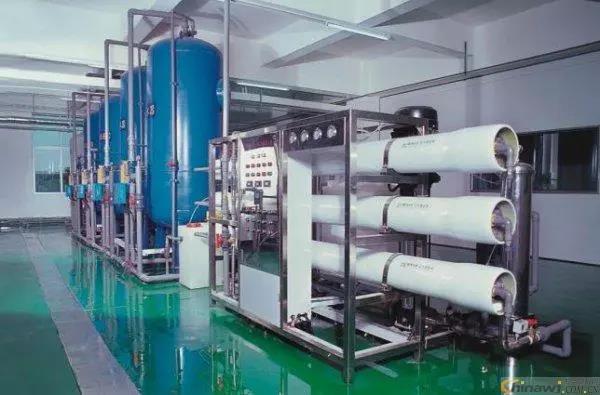
If you want the reverse osmosis membrane to not be polluted so quickly, you should buy anti-fouling and anti-pollution reverse osmosis membranes!
Recommended Dynamics


Address: 3rd Floor, Building C15, Phase II, Dongyi International Media Industrial Park, Chaoyang District, Beijing
Email:info@horwater.com

Email:
Tel:
Tel:
图片alt标题设置: Horwater Environment (Beijing) Co., Ltd.
表单验证提示文本: Content cannot be empty!
循环体没有内容时: Sorry,no matching items were found.
CSS / JS 文件放置地